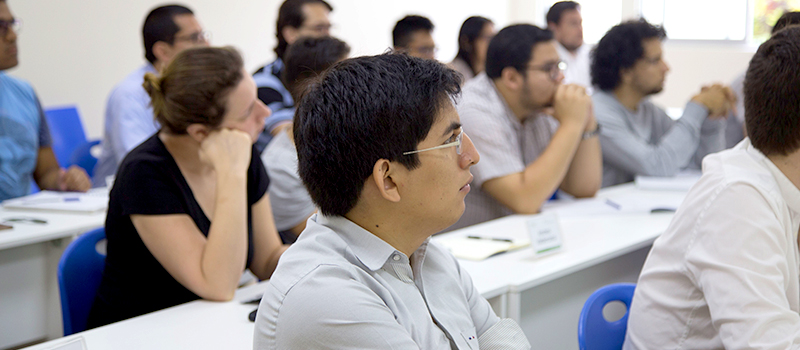
Watch a video from our previous edition.
Courses are taught by experienced professors from VSE and LimaSE’s associate members, all experts in their fields. This program is ideal for postgraduate and advanced undergraduate students from Latin America and around the world, as well as recent graduates and professionals in economics who want to deepen their knowledge and skills.
Take part in this unique opportunity to learn from top researchers, connect with peers, and strengthen your expertise in a dynamic and supportive environment.
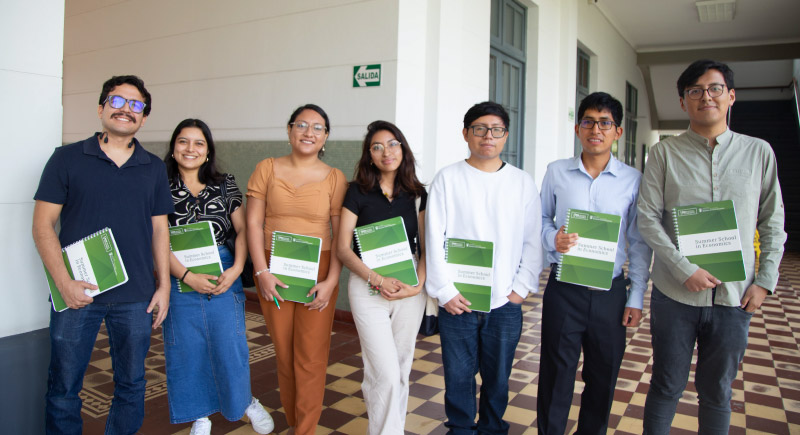
The Vancouver School of Economics is pleased to partner once again with the Lima School of Economics for the 2026 Lima Summer School. VSE faculty will lead two advanced courses: Micro and Macro Perspectives on Labour Economics, taught by Professor Henry Siu, and Political Economy and Development, taught by Professor Claudio Ferraz. These courses provide analytical and empirical tools for high impact work in research and policy, with a strong emphasis on hands-on applications and real data. This edition marks our tenth year of collaboration, a milestone that reflects our shared dedication to rigorous training and broader access to world-class economics education. Join a community of motivated peers, learn directly from leading researchers, and accelerate your academic and professional path.
We are excited to launch the tenth edition of the Lima Summer School in Economics, in collaboration with the Vancouver School of Economics (British Columbia, Canada). This milestone brings four advanced, in-person courses designed to strengthen analytical judgment and translate evidence into action: Financial Inclusion, Political Economy and Development, Micro and Macro Perspectives on Labour Economics, and Survey Design.
The Summer School serves aspiring economists preparing for master’s or doctoral studies and advanced undergraduates aiming to build capabilities and connections that set you apart. It also offers practical value for professionals in government, NGOs, and the private sector, equipping participants with tools to design, implement, and evaluate policies in real settings.
Most classes will take place at our Miraflores Campus in Lima, fostering close interaction with faculty and peers. In honor of our tenth edition, we are extending the experience to Piura, where Political Economy and Development will be offered exclusively. This expansion underscores our commitment to broadening access to high-quality economics education across Peru while preserving the intensive, hands-on format that defines our program. Join a diverse cohort, learn directly from leading researchers, and build capabilities and connections that will set you apart. We look forward to welcoming you to Lima and Piura in 2026.
This intensive mini-course tackles fundamental questions about how modern labour markets operate and evolve. In the first part, we'll examine unemployment dynamics, exploring the importance of search frictions and the role of job and worker flows. We'll then examine how technological change drives both short-run employment dynamics and long-run inequality trends. The focus will be on automation, its effects on different segments of the workforce, and what that means for employment and earnings patterns, inequality, and policy intervention. Throughout, you will be introduced to key methodological tools—both theoretical frameworks like dynamic programming and search-and-matching models, and empirical strategies like instrumental variables and regression discontinuity designs.
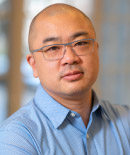
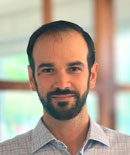
Dr. Henry Siu is a Professor at the Vancouver School of Economics at UBC and a Faculty Research Fellow at the NBER. He also serves as a member of the Dr. Henry Siu– Vancouver School of Economics Dr. Henry Siu is a Professor at the Vancouver School of Economics at UBC and a Faculty Research Fellow at the NBER. He also serves as a member of the Canadian Macroeconomics Study Group (CMSG) Secretariat; Canadian Economics Association Board of Directors; Labour Market Information Council Experts Panel; and as the Academic Director of the Centre for Innovative Data in Economics Research (CIDER). His research is in macroeconomics and labour economics, with work on automation and the decline of middle-class jobs, recessions and jobless recoveries, and youth unemployment.
Household surveys are among the most important innovations in the social sciences of the past century. They underpin our understanding of social phenomena and guide policy inference. This mini-course on survey design in development economics will equip students with the conceptual skills to design and implement high-quality household surveys, with a focus on policy-relevant questions, the use of surveys across key development topics, and measurement considerations that shape what we learn from them.
Javier Romero is a senior economist in the World Bank Poverty and Equity Practice and the Latin America and the Caribbean Gender Innovation Lab (LACGIL). His work focuses on economic development, poverty, health, labor, and gender, where he uses experimental and quasi-experimental methods to guide policy making. At the World Bank, Javier has contributed to the country programs of Bolivia, Costa Rica, Guatemala, Panama, and Peru. Before joining the Bank, Javier worked at the Research Center of Universidad de Piura, Peru, the Central Bank of Peru, and co-founded a non-profit organization that works in sustainable development projects in the Amazon forest. Javier holds a PhD and MA in economics from Duke University and a BA and Licenciatura in economics from Universidad de Piura.
Financial inclusion is the process through which financial institutions serve underprivileged customers by means of lending and savings products. Every person in the economy faces economic decisions for which access to finance may play an important role. Yet not all agents in the economy are subjects to credit. The lack of systematic knowledge about personal financial decisions in an emerging market context is a serious concern that can now be addressed with the help of detailed quantitative data. A vibrant literature in economics and finance has been addressing questions about lending and borrowing best practices directly related to financial inclusion that remain largely ignored in local debates and policies. Thus, there is a clear learning opportunity for a wide spectrum of analysts, decision-makers, scholars and a general audience interested in understanding how to enhance financial inclusion, with a special focus on consumer and household finance. The present short course takes advantage of three strengths: 1) the use of extraordinarily detailed panel data on financial and economic decisions by millions of individuals in Peru; 2) the robust analysis of this information with standard econometric techniques placed in the context of state-of-the-art literature on financial inclusion; and 3) a clear and simple exposition based on the academic experience of the instructors.
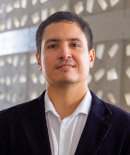
Dr. Gabriel Natividad is a Professor of Economics at Universidad de Piura (Lima) and a member of the Lima School of Economics. He received his PhD at UCLA. He has published his scientific research in the Journal of Finance, the Review of Financial Studies, and the Journal of Financial Economics.
Soulange Gramegna is a consultant in the Markets, Competition and Technology division of the World Bank in Washington, DC. She graduated from the MPA/ID program at Harvard Kennedy School in 2022. She lives in Lima and has worked on institutional reforms and market structure across several countries.
This mini-course will employ both theoretical frameworks and empirical methods to explore the challenges associated with and potential solutions to obstacles in economic development that are intertwined with political factors. Our journey will commence with a historical perspective, delving into the roles of institutions, state capacity, and their influence on economic development. Subsequently, we will engage in a comprehensive discussion of the political economy surrounding public service delivery in developing nations. Moving forward, we will scrutinize shortcomings within the democratic process, encompassing issues such as corruption, clientelism, patronage, and the private appropriation of state resources. To conclude, we will investigate the ways in which democracy can be harnessed to improve development, backed by empirical evidence on various reform initiatives.
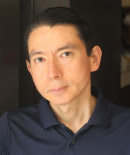
Dr. Claudio Ferraz is Professor of Economics at the Vancouver School of Economics, University of British Columbia, and a part-time professor in the Department of Economics at the Pontifícia Universidade Católica do Rio de Janeiro (PUC-Rio). He is co-director of the Political Economy Network of LACEA and RIDGE, a J-PAL affiliate, a Research Associate at the National Bureau of Economic Research (NBER), an honorary member of LACEA, and a Fellow of the Econometric Society. He was recently elected Vice President of LACEA for 2026–2027, after which he will serve as President through December 2029. Dr. Ferraz is an Associate Editor of the Journal of Political Economy, the Journal of Development Economics, and the World Bank Economic Review. His research focuses on economic development, political economy, and public economics, with an emphasis on governance and accountability in developing countries and their consequences for politics and public service delivery.
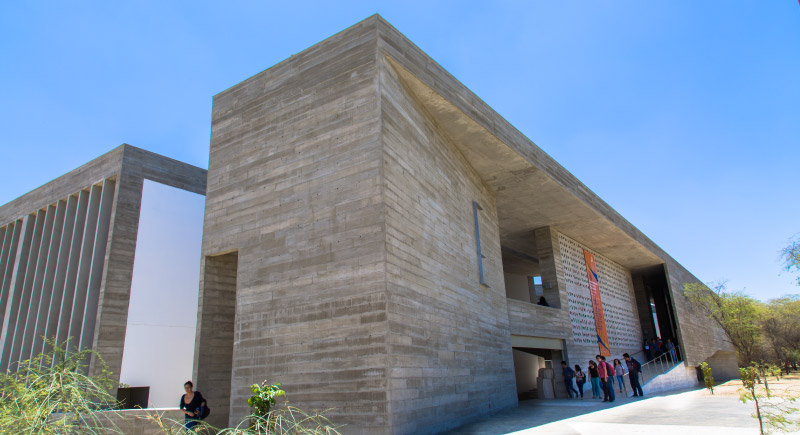
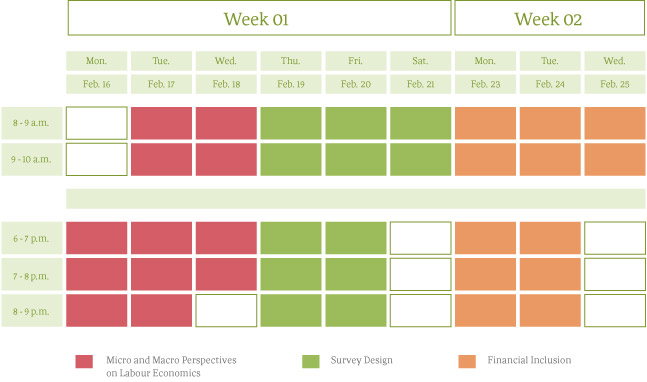
Part of the 2026 Lima Summer School in Economics will take place at the Lima Campus of Universidad de Piura (UDEP), from February 16-25, 2026.
UDEP Lima Campus is located at Calle Mártir José Olaya 196, in the Miraflores District.
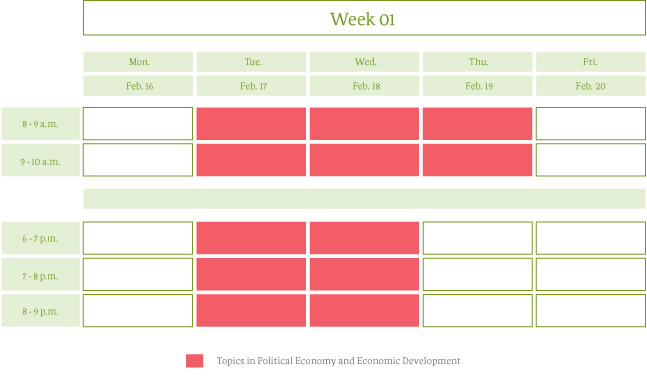
Courses will be held according to the following schedule:
Important:
In all courses the student must attend at least 80% of the sessions per course to be awarded an attendance certificate.
Program fees as a function of the total number of courses in which the participant registers (Lima):
| Course Name | General public | Undergrad and graduate students | Undergrad and graduate students from public universities |
|---|---|---|---|
| One 12-hour course | US$ 500 | US$ 400 | US$ 250 |
| Two 12-hour courses | US$ 800 | US$ 640 | US$ 400 |
| Full Program (all three Lima courses) | US$ 1000 | US$ 800 | US$ 500 |
Discounts:
Early bird: 10% off General Public fees for registrations by January 10, 2026. Cannot be combined with student discounts.
Alumni (UDEP or Summer School): 5% off all categories. If combined with Early bird (General Public only), a total discount of 15% applies.
Corporate: available for institutions registering five or more participants; email summerschool@udep.edu.pe. Corporate discounts cannot be combined with any other discount.
Payment instructions will be provided to admitted candidates by the Summer School Admissions Office.
Upon completion, participants receive a certificate indicating courses and total hours attended.
The other part of the 2026 Lima Summer School in Economics will take place at the Piura Campus of Universidad de Piura (UDEP), from February 17 to February 19, 2026.
UDEP Piura Campus is located at Av. Ramón Mugica 131, Piura.
Classes will follow the schedule below. Admitted participants will also receive details about a special post-course event. Participation in this event is optional and not included in the tuition fee.
Important:
In all courses the student must attend at least 80% of the sessions to be awarded an attendance certificate.

Program fees as a function of the total number of courses in which the participant registers (Piura):
| Course Name | General public | Undergrad and graduate students | Undergrad and graduate students from public universities |
|---|---|---|---|
| One 12-hour course | US$ 500 | US$ 400 | US$ 250 |
Discounts:
Early bird: 10% off General Public fees for registrations by January 10, 2026. Cannot be combined with student discounts.
Alumni (UDEP or Summer School): 5% off all categories. If combined with Early bird (General Public only), a total discount of 15% applies.
Corporate: available for institutions registering five or more participants; email summerschool@udep.edu.pe. Corporate discounts cannot be combined with any other discount.
Payment instructions will be provided to admitted candidates by the Summer School Admissions Office.
Upon completion, participants receive a certificate indicating courses and total hours attended.
Application for the 2026 Lima Summer School in Economics opens on November 24, 2025.
The application deadline is January 31, 2026. Please note that course capacity is limited, and some courses may fill before the deadline.
To apply, complete and submit the online registration form. Applications are reviewed on a rolling basis, and candidates will be notified of decisions by email.
Important: Applications for Lima (multiple courses) and Piura (single course) are handled separately. The form will guide you through the appropriate registration process.
Payment instructions will be provided to those admitted into the program.
Online Registration Form
LimaSE will award a limited number of full and partial scholarships for the 2026 Lima Summer School in Economics held at our Lima Campus.
How to apply
In addition to completing the Online Registration Form, send the following documents by December 15, 2025, to summerschool@udep.edu.pe:
Eligibility and selection
Scholarships are merit-based, and awards are determined by the Selection Committee using the information provided in the application.
Only candidates applying to the full Lima program (all three Lima courses) will be considered.
Coverage
Scholarships cover tuition only. Travel and accommodation are not included; participants from outside Lima must make their own arrangements. The scholarship is not compatible with any other discount offered by the Summer School.
LimaSE will award a limited number of partial scholarships for the 2026 Lima Summer School in Economics held at our Campus Piura.
How to apply
In addition to completing the Online Registration Form, send the following documents by December 15, 2025, to summerschool@udep.edu.pe:
Eligibility and selection
Scholarships are merit-based. Awards are determined by the Selection Committee using the information provided in the application.
Coverage
Scholarships cover tuition for the course taught at Campus Piura only. Travel and accommodation are not included; participants from outside Piura must make their own arrangements. The scholarship is not compatible with any other discount offered by the Summer School.
Watch a video from our previous edition.

Since 2022, LimaSE and VSE have established a partnership with Econthaki, through which participants in Econthaki programs can access full tuition scholarships to attend the Lima Summer School.
For the year 2026, 10 participants from Econthaki programs will receive this benefit and participate in the courses offered in our Lima Campus.
These scholarships are directly assigned by Econthaki.
To learn more about Econthaki and its programs, please visit https://econthaki.github.io/.